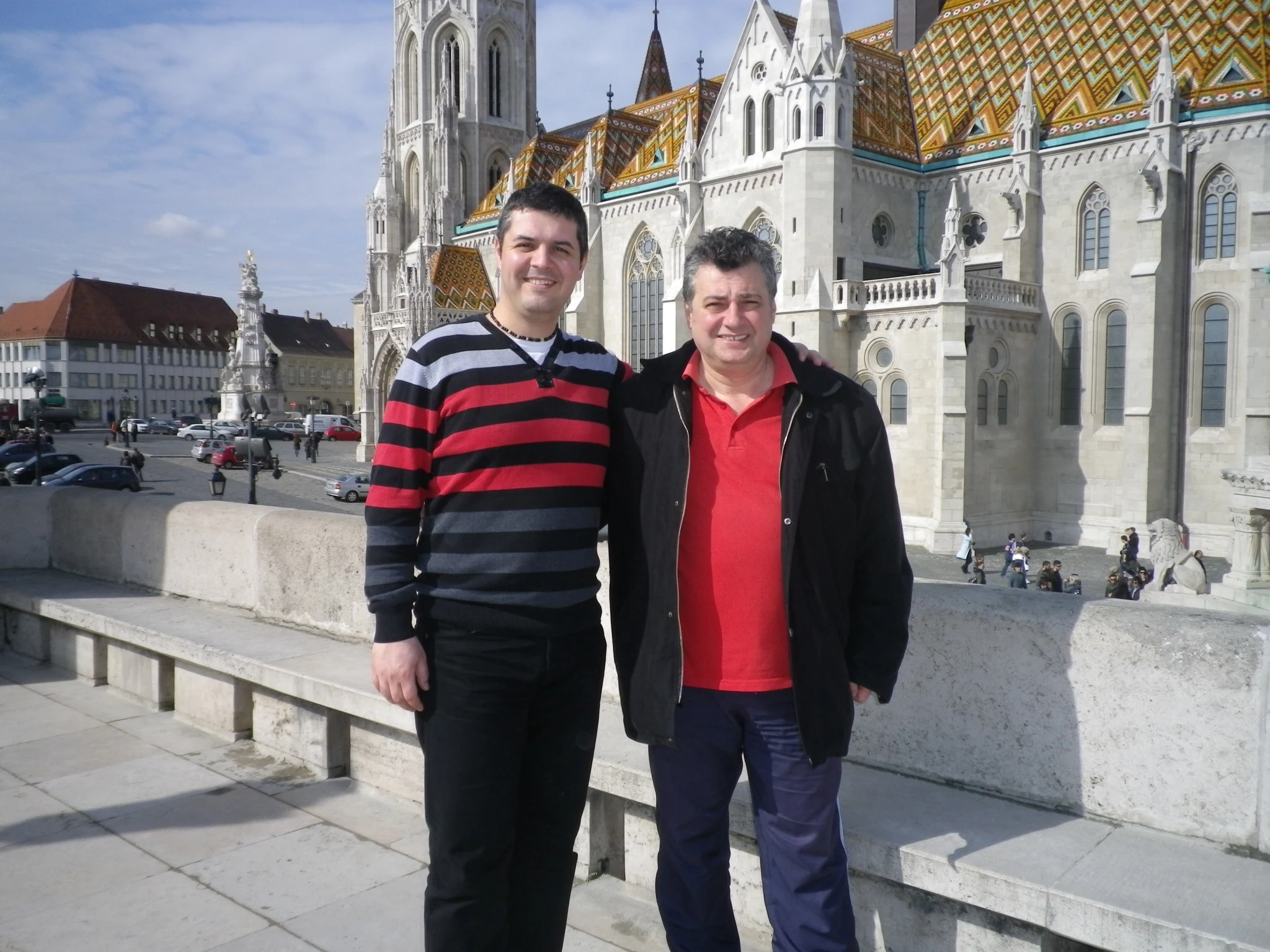
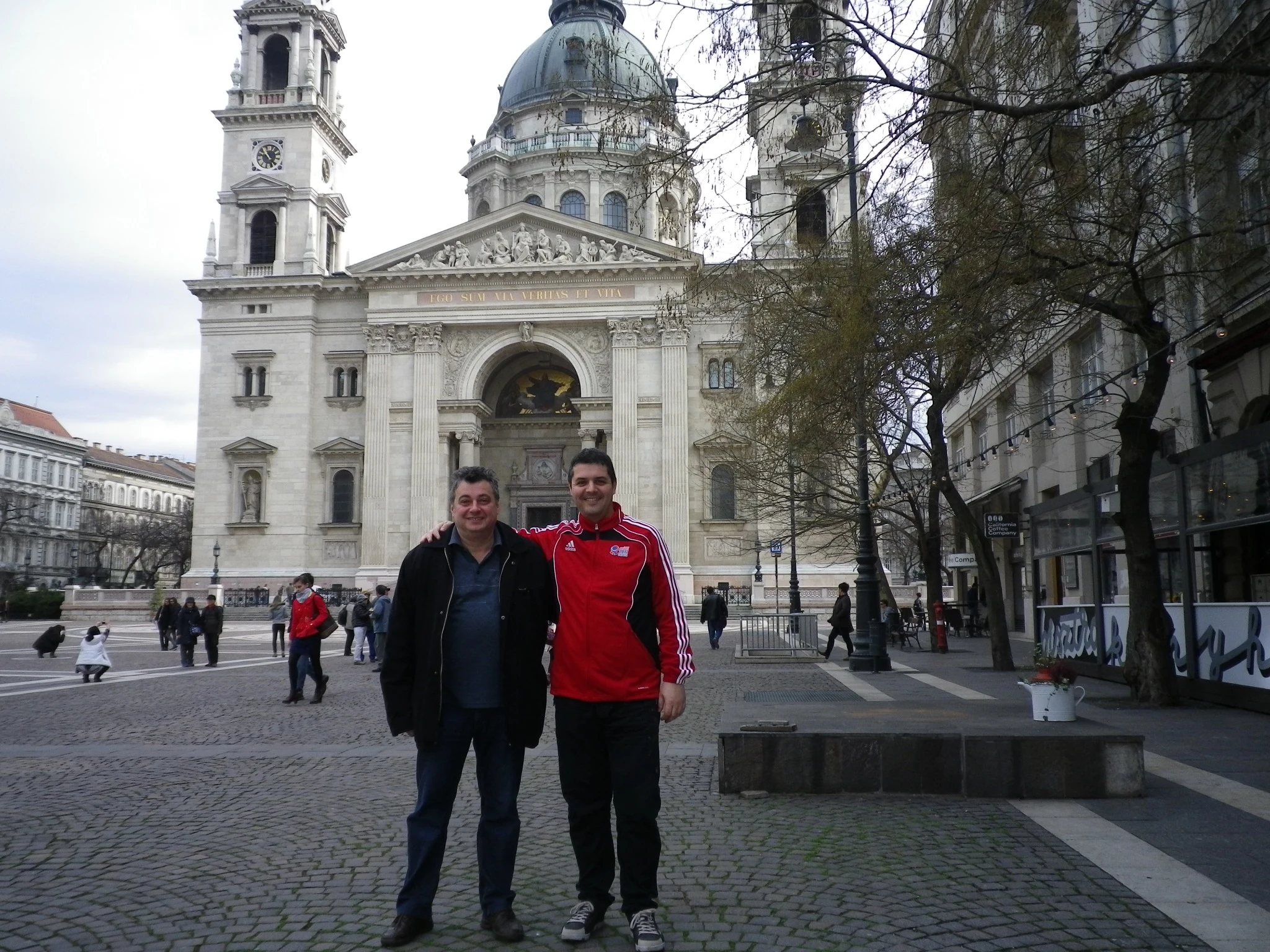
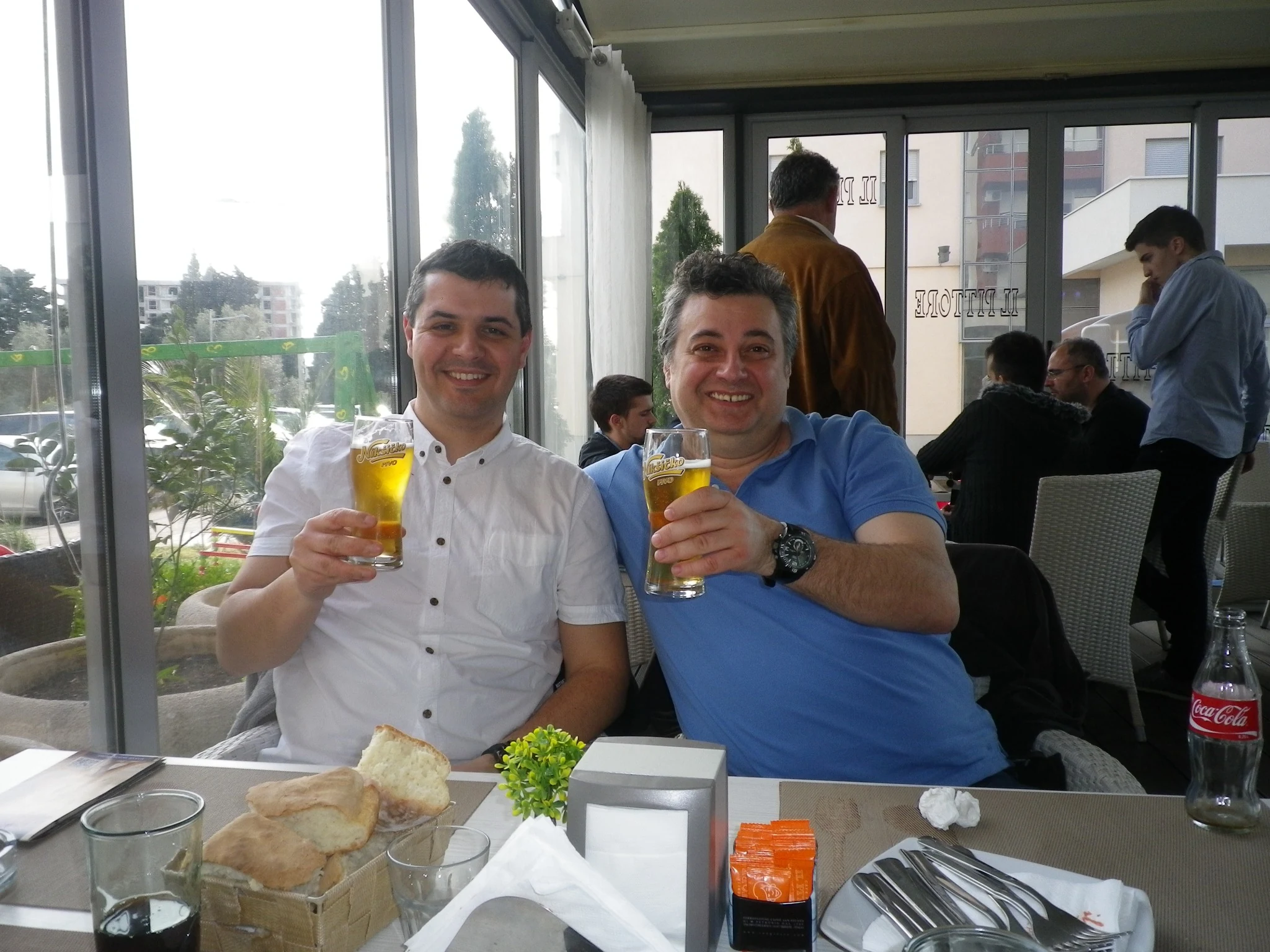
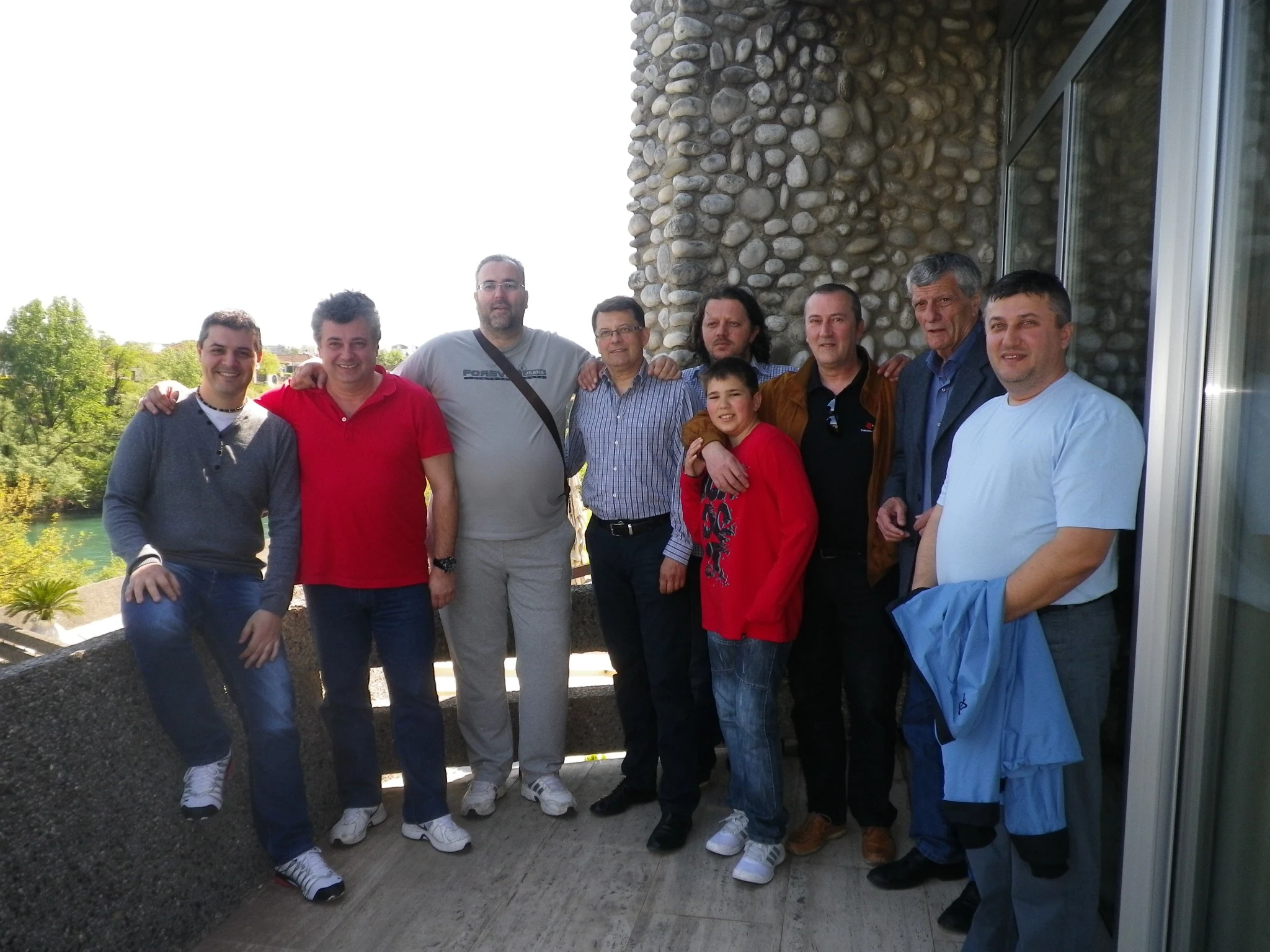
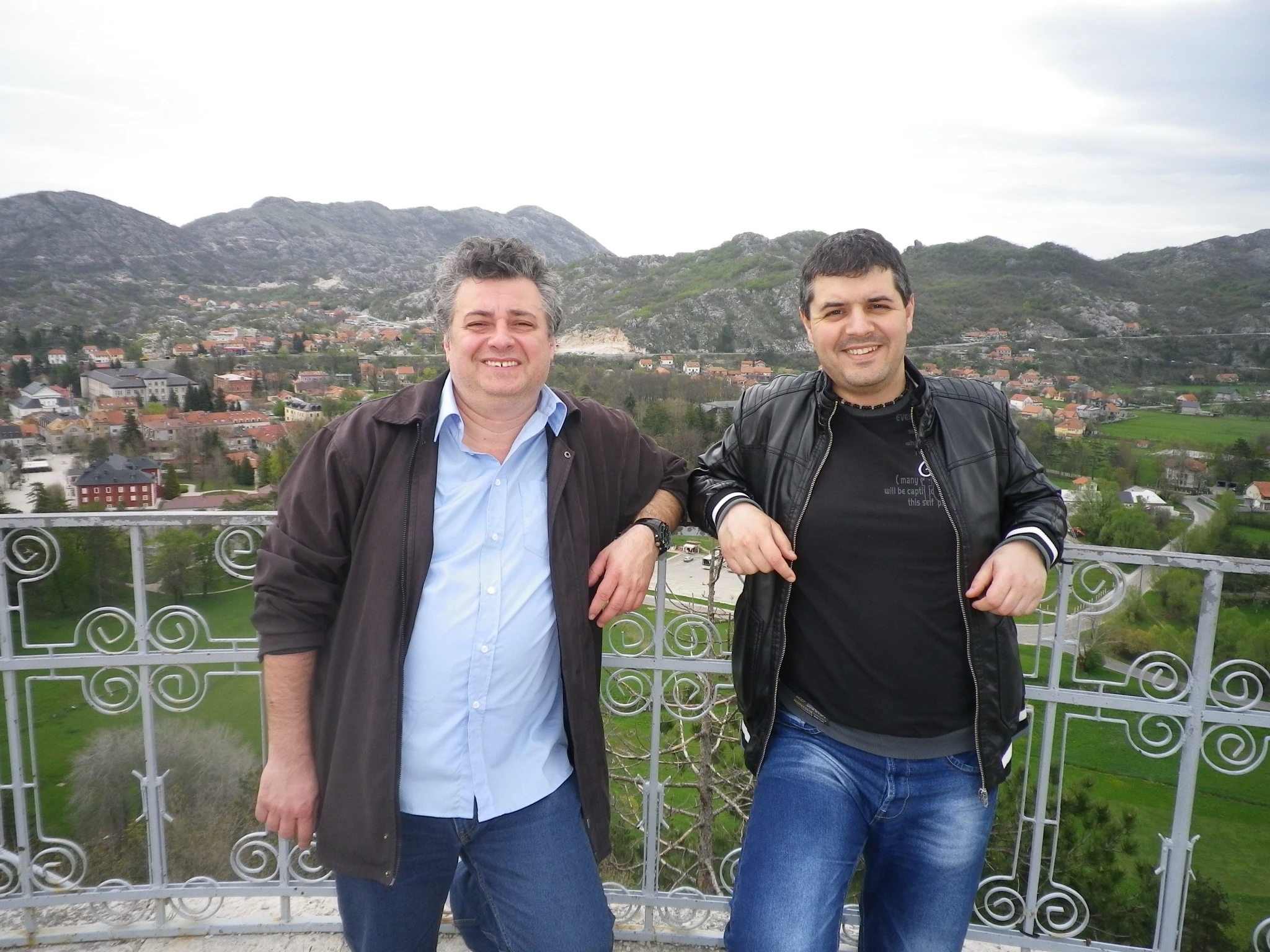
Grandmaster Dragan Kosić coached Petar Benković during his junior years, and their friendship continues to this day. He prepared Petar for the 49th Junior Championship of FR Yugoslavia in Mataruška Banja in 1997 and the World Championship in Oropesa del Mar, Spain, in 1998, where Petar achieved excellent results. This newspaper archive takes us back to 2009; photographs from their travels in 2014 and 2015 add a personal record of their friendship beyond the chessboard.
Archive note: the following text is adapted from a newspaper page published in 2009. Club affiliations, engagements and future plans refer to the time of the original article.
A Knight on 64 Squares
Dragan Kosić was born in Sremska Mitrovica on 15 February 1970. He attended Vladimir Nazor Primary School, now Sveti Sava, and the 9. maj economics secondary school. Besides chess, he also showed an interest in athletics and football.
His interest in chess emerged at seven. At eight, he joined Srem Chess Club, where coach Ivan Jurić introduced him to competitive chess. He began playing youth championships at nine, joined the club’s junior team the following year, and became a candidate master at eleven.
Between thirteen and fourteen, he won the championships of Vojvodina, Serbia and Yugoslavia. He also took first place at an unofficial European under-16 championship. In 1985 he finished third at the world championship mentioned in the article, then joined Yugoslavia’s junior national team.
From young talent to grandmaster
The junior team won the Balkan championship in three consecutive years, 1986–1988. The article recalls a victory over Veselin Topalov in 1986 and Kosić’s first international title norm at a tournament in Zrenjanin.
Following a tournament in Satu Mare, Romania, he became Yugoslavia’s youngest international master at seventeen. His coaches included Miodrag Jovančić and Dušan Trajković. He later played for Yugoslavia’s national team and shared in its team success in 1991, before sanctions interrupted international appearances.
His first grandmaster norm came at the 1993 open in Vrnjačka Banja, where he finished third. He earned another in Jagodina, finishing second, and also won the national championship that year. After the Yugoslav championship in Novi Sad, he became a grandmaster; FIDE confirmed the title at the end of the year.
The newspaper describes the limitations imposed by sanctions, when he mainly faced domestic opponents, and his later return to a busy international schedule.
Club and national-team chess
From 1995, club chess took him through numerous countries. His teams included Agrohim in Novi Sad, Progres Elektroprivreda in Belgrade, clubs in Munich and Budapest, Junior in Rijeka and Napredak. He also played in the European club competition.
He played for ŠK Beograd from 1990 to 1996, a period of national titles for the club, and represented his country in team events in 1996 and 1997.
After moving to Podgorica in 1997, he played for Budućnost until 2008. The club became national champion in 1998. At the time of the article, he played for Podgorica’s Elektroprivreda and Montenegro’s national team. He also spoke of a planned tournament in Osijek in February 2010.
Chess, combinations and thought
Kosić describes chess as requiring persistence, combinational ability and mental freshness. He compares its beauty to poetry: a combination and its outcome can have a meaning beyond the score.
He discusses positions in which a player recognises defeat before the final moves are played, using familiar mating patterns as examples.
A FIDE certificate also enabled his coaching work. The article names Petar Benković, his fellow townsman and an international master, among the players he coached. Club commitments in Munich and Budapest were then leaving less time for teaching.
Sremska Mitrovica needs a chess school
A separate newspaper feature examines the need for a children’s chess school. It argues that, despite competition from computers and other activities, chess develops abstract thinking, combinational skills and intellectual ability.
Petar Benković hoped to open a school for young children with Srem Chess Club. Funding was an obstacle, and the article expressed the hope that the city would support the project proposed by Kosić’s pupil.
Role models and strong opponents
Kosić names Fischer and Spassky as his role models, contrasting Fischer’s intense focus on chess with Spassky’s broader interests. He also mentions Karpov and Kasparov among the champions he would like to face.
He says he seeks strong opposition regardless of ratings, and recalls defeating Vasik Rajlich at a Canadian tournament in 1998. Rajlich later became known as the creator of the chess program Rybka.
A simultaneous exhibition in Sremska Mitrovica
On 10 December 2009, Kosić gave a simultaneous exhibition at the student residence in Sremska Mitrovica. He played ten members of its chess section and two more experienced players from its football section, praised their chess skills, and briefly spoke to television reporters.
A spectacular win in Doboj
The page also features Kosić–Draško, Doboj 1999, a brilliant 27-move win. According to the newspaper, Chess Informant ranked it third among roughly 500 published games. Its diagram and move score can be seen on the original newspaper page.
Source: “Vitez na 64 polja”, Sremske novine, Wednesday, 16 December 2009, page 9. Prepared by Aleksandar Tošić. This web text is an English adaptation of the supplied newspaper original, not a verbatim transcription. Travel photographs: Petar Benković’s private archive.